Nobody Talks About Your Period During a Disaster
Nobody Talks About Your Period During a Disaster — So I Will
I have read hundreds of emergency preparedness guides.
I have not found a single mainstream survival resource that addresses feminine hygiene as a preparedness category. Not one. The assumption — almost always unstated — is that the person preparing for emergencies does not menstruate.
Most of us do. And this matters more than most guides acknowledge.
Why This Matters More Than You Think
Menstrual management during an emergency is not just about comfort. It is about health, dignity, and function. Here is what actually happens during a disaster scenario that affects your period:
Stress Changes Your Cycle
Cortisol — the primary stress hormone — directly disrupts hormonal regulation. During a genuine emergency your body may respond by stopping your period entirely (stress amenorrhea), starting it early, making it heavier than usual, or causing severe cramping. None of these are predictable. All of them require you to have supplies on hand regardless of where you are in your cycle when the emergency begins.
Access Disappears
During a mass evacuation, grocery stores empty within hours. Dollar stores close. Gas stations run out of everything except fuel — and sometimes that too. The assumption that you can "just pick up what I need when I need it" collapses completely during any significant emergency event.
Sanitation Becomes Complex
Water outages, shelter environments, and displacement scenarios all make managing menstruation more complicated. Having the right supplies and knowing how to use them with limited water access is a real skill — not a topic to figure out during a crisis.
What to Pack — The Honest List
Your menstrual emergency kit should cover a full cycle — not just your normal cycle length, but a stress-extended one. Plan for seven to ten days minimum. Here is what goes in it:
Option 1 — Disposable Supplies
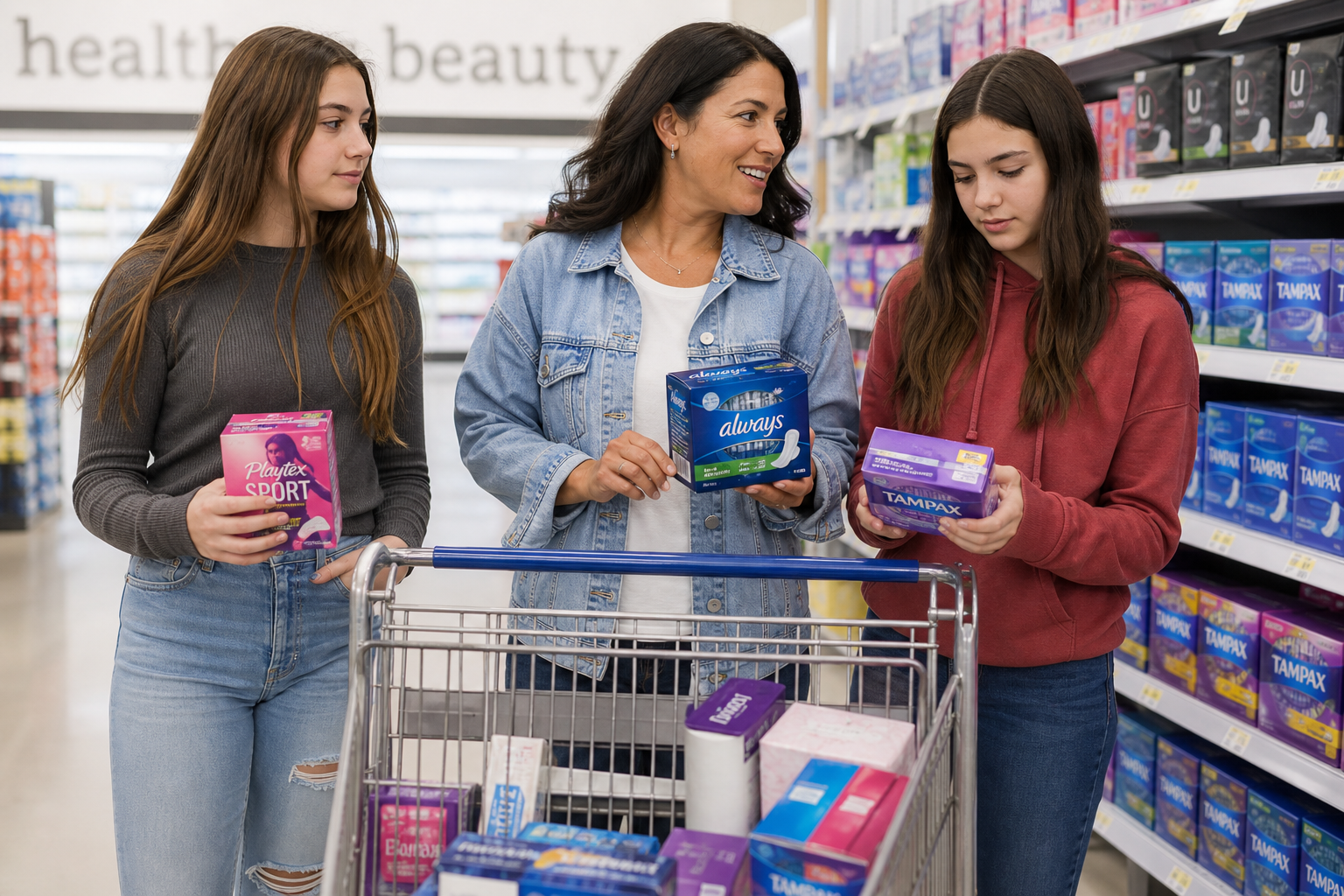
- Tampons — one full box minimum. Regular and super absorbency. Stress can change flow intensity unpredictably.
- Pads — one full pack. For overnight use and for days when tampons are not practical.
- Panty liners — one pack. For spotting and light days.
- Pain reliever — a full bottle. Ibuprofen specifically — it reduces prostaglandins that cause cramping, not just pain. More effective than acetaminophen for menstrual pain.
Option 2 — Reusable Supplies (Recommended for Extended Scenarios)
If a scenario extends beyond your disposable supply, reusable options become essential. They require water to clean but use dramatically less water per cycle than disposables — and they never run out.
- Menstrual cup or disc. One cup lasts up to 10 years. No waste. No resupply. Empties every 8-12 hours. For extended emergencies or bug-out scenarios this is the gold standard.
- Period underwear — 3-5 pairs. Washable, reusable, no ongoing supply needed.
- Reusable cloth pads — 5-7 pads. Washable, long-lasting, zero ongoing cost after initial purchase.
Managing Hygiene With Limited Water
Water outages during emergencies are common. Here is how to manage menstrual hygiene with minimal water access:
- Baby wipes are your best friend. Keep a full pack in your kit. Unscented, biodegradable. They allow thorough cleaning without running water.
- Hand sanitizer before and after any menstrual product handling. Reduces infection risk dramatically when washing is not possible.
- Menstrual cups require less water to clean than you think. A small amount of clean water to rinse is sufficient between emptying cycles. Wiping with a clean cloth works in true water scarcity situations.
- Waste disposal. In a shelter scenario, used disposable products should be double-bagged in ziplock bags. Pack extra ziplock bags in your kit for this purpose.
Hormonal Medications — Do Not Overlook This
Birth control pills, hormonal IUD maintenance, hormone replacement therapy, and thyroid medications all interact with your menstrual cycle. These are not optional medications. Running out of them during an emergency is a medical event.
- Maintain a 30-day supply minimum of all hormonal medications. Refill prescriptions before they run out rather than after. Keep a medication list in your go-bag with drug names, dosages, and prescribing doctor contact information.
- If you take birth control pills: Missing pills during an emergency causes breakthrough bleeding on top of an already stressful situation. Have your supply secured before any emergency.
- Communicate with your prescriber about emergency supplies. Many physicians will write a 90-day supply prescription for patients who explain they are building an emergency kit. Ask.
What to Build This Week
- Stage a menstrual emergency pouch in your go-bag. Ziplock bag: tampons, pads, pain reliever, wipes, hand sanitizer, ziplock bags for disposal, and your hormonal medication supply.
- Consider adding a menstrual cup. Even if you do not use one currently it is worth having for extended scenarios. The learning curve is low.
- Check your medication supply right now. How many days do you have? If it is less than 30 — refill this week.
- Have this conversation with the women in your household. This is not embarrassing — it is practical. Every woman in your household needs to have her own supply staged.
✅ The Bottom Line
The survival world has ignored this topic for decades. I am not going to. A woman who is managing an unexpected heavy period in a disaster scenario with no supplies is dealing with a completely preventable problem. Five minutes of planning right now eliminates it entirely.
🎯 Know Exactly Where You Stand
Take the SurvivElle Archetype Quiz — find out exactly what to tackle next.
Take the Quiz →