
How Much Water Do You Actually Need to Survive
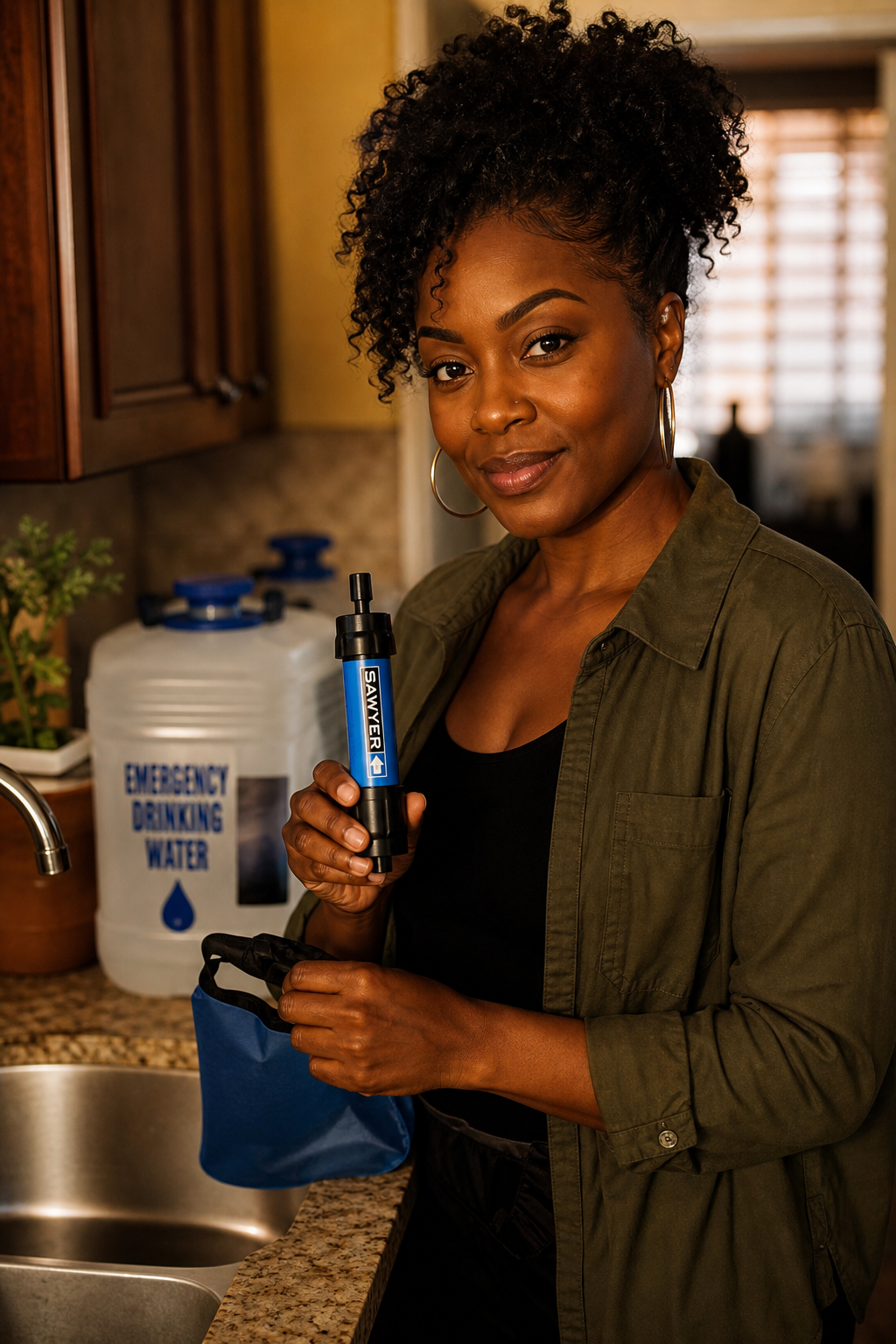
How Much Water Do You Actually Need to Survive? (The Answer Will Surprise You)
You've heard the rule: one gallon per person per day.
But have you ever actually measured a gallon of water and thought about surviving on it? Drinking. Cooking. Basic hygiene. Wound care. Medication. Pet needs.
One gallon disappears fast. And most women have nowhere near enough stored — or they have the wrong kind stored in containers that will make them sick.
Let's fix that right now.
The Real Number (And Why It's More Than You Think)
The standard FEMA recommendation is one gallon per person per day for a minimum of three days. But here's what they don't tell you:
⚠️ That number is the absolute floor — not the goal.
Emergency management professionals recommend planning for at least one week minimum, and ideally two weeks for a household disruption scenario.
Here's why the gallon-a-day number falls short for most women:
It doesn't account for:
- Hot climates or physical exertion — both double your hydration needs
- Breastfeeding mothers — add at least one extra quart per day
- Children — they dehydrate faster than adults under stress
- Pets — a medium dog needs about a quart per day
- Cooking and food preparation
- Basic wound cleaning and hygiene
- Medications that require extra hydration
📊 The Honest Math — Family of 3 + Dog for Two Weeks
Does that number feel overwhelming? Good. That means you're taking it seriously now.
What Most Women Store Wrong
Walk into any home and you'll find one of three scenarios:
Scenario 1 — Nothing
No stored water at all. Completely dependent on tap water continuing to flow. This is the most common situation and the most dangerous.
Scenario 2 — A Case of Plastic Bottles
A 24-pack of water bottles from the grocery store. That's roughly 3 gallons. For a family of three that's less than one day of survival water. Better than nothing — barely.
Scenario 3 — Old Jugs in the Garage
Gallon jugs sitting in a hot garage for two years in containers not rated for long-term storage. The plastic has leached into the water and the containers may have grown bacteria. This water could make you sick.
How to Store Water the Right Way
Option 1 — Commercial Water Storage Containers
Purpose-built water storage containers made from food-grade BPA-free plastic are your best bet. The WaterBOB is one of the most popular options — it holds 100 gallons and fits in a standard bathtub. Fill it when a disaster is approaching and it keeps water clean for up to 16 weeks.
Option 2 — Commercial Water Pouches
Emergency water pouches have a 5-year shelf life and are Coast Guard approved. Perfect for go-bags and car kits. Not practical as your primary home storage but excellent as backup.
Option 3 — Water Barrels
55-gallon water barrels are the gold standard for serious home storage. One barrel covers a single person for over a month at the gallon-a-day minimum. They require a hand pump to access and need to be stored away from direct sunlight.
over 7 days
minimum
What to Do When Your Stored Water Runs Out
This is where most preparedness guides stop — but real emergencies don't stop at your stored supply. You need a plan for water sourcing and purification.
Step 1 — Know Your Sources
Before an emergency hits, identify every water source within a mile of your home: streams, rivers, ponds, a neighbor's pool (pool water can be purified), rain collection systems.
Step 2 — Filter First
Natural water sources contain sediment, bacteria, protozoa, and sometimes viruses. The Sawyer Squeeze is the gold standard for portable filtration — it filters up to 100,000 gallons and weighs just 3 ounces.
Step 3 — Purify Second
Filtering isn't enough on its own for all water sources. Purification tablets or drops kill viruses that filters miss. Aquatabs are small, inexpensive, and have a long shelf life. Always purify after filtering for maximum safety.
Step 4 — Boiling as Backup
Boiling water for one minute (three minutes at high altitude) kills all biological contaminants. It requires fuel and time but is completely reliable when filters and tablets aren't available.
The SurvivElle Water Priority List
Build your water preparedness in order of priority:
-
1
Week 1 — Immediate Floor
Store at least 3 gallons per person in food-grade containers. Do it this weekend — this is your emergency floor.
-
2
Week 2 — Expand with WaterBOB
Add a WaterBOB to your bathroom. Fill it at the first sign of any incoming disaster. Instant 100 gallons.
-
3
Week 3 — Portable Filtration
Add a Sawyer Squeeze filter and purification tablets to your go-bag. Ability to source water anywhere.
-
4
Week 4 — Long Term Storage
Consider a 55-gallon water barrel. One barrel per adult in your household is the preparedness community standard.
Water for Your Pets
This section exists nowhere in mainstream preparedness guides. We're fixing that.
Your pets depend entirely on you for water in an emergency. A medium-sized dog (40-60 lbs) needs approximately one quart of water per day under normal conditions. Under stress and heat that can double.
🐾 Pet Water Prep Checklist
Calculate your pet's daily water needs → Add to your total household calculation → Keep collapsible water bowls in your go-bag → Never assume your pet can drink from natural sources safely without filtration.
Signs of Dehydration to Watch For
In a real emergency hydration management becomes a survival skill. Know these warning signs:
Mild Dehydration
- Thirst — you're already mildly dehydrated when you feel thirsty
- Darker yellow urine
- Decreased energy
Moderate Dehydration
- Very dark urine or no urination for 8+ hours
- Headache and dizziness when standing
Severe Dehydration — Seek Medical Help
- Confusion or disorientation
- Rapid heartbeat
- No urination for 12+ hours
- Sunken eyes
⚠️ Monitor These People First
Children and elderly individuals reach severe dehydration faster than healthy adults. Under stress, their needs are your first priority.
Your Action Step This Week
Pick one thing from this list and do it before the week is over:
- Count how many gallons of water you currently have stored
- Order a WaterBOB for your bathtub
- Add a Sawyer Squeeze filter to your go-bag
- Calculate your household's real 14-day water need using the calculator above
- Add water purification tablets to your kit
🎯 Know Exactly Where You Stand
Take the SurvivElle Archetype Quiz — 10 questions will tell you exactly what to tackle next based on where you are today.
Take the Quiz →🎒 Get the Free 72-Hour Survival Starter Kit
52-item checklist built specifically for women. Covers everything most guides leave out — including what they never talk about.
Get Your Free Kit →