
When the Lights Go Out Power Outage Guide for Women
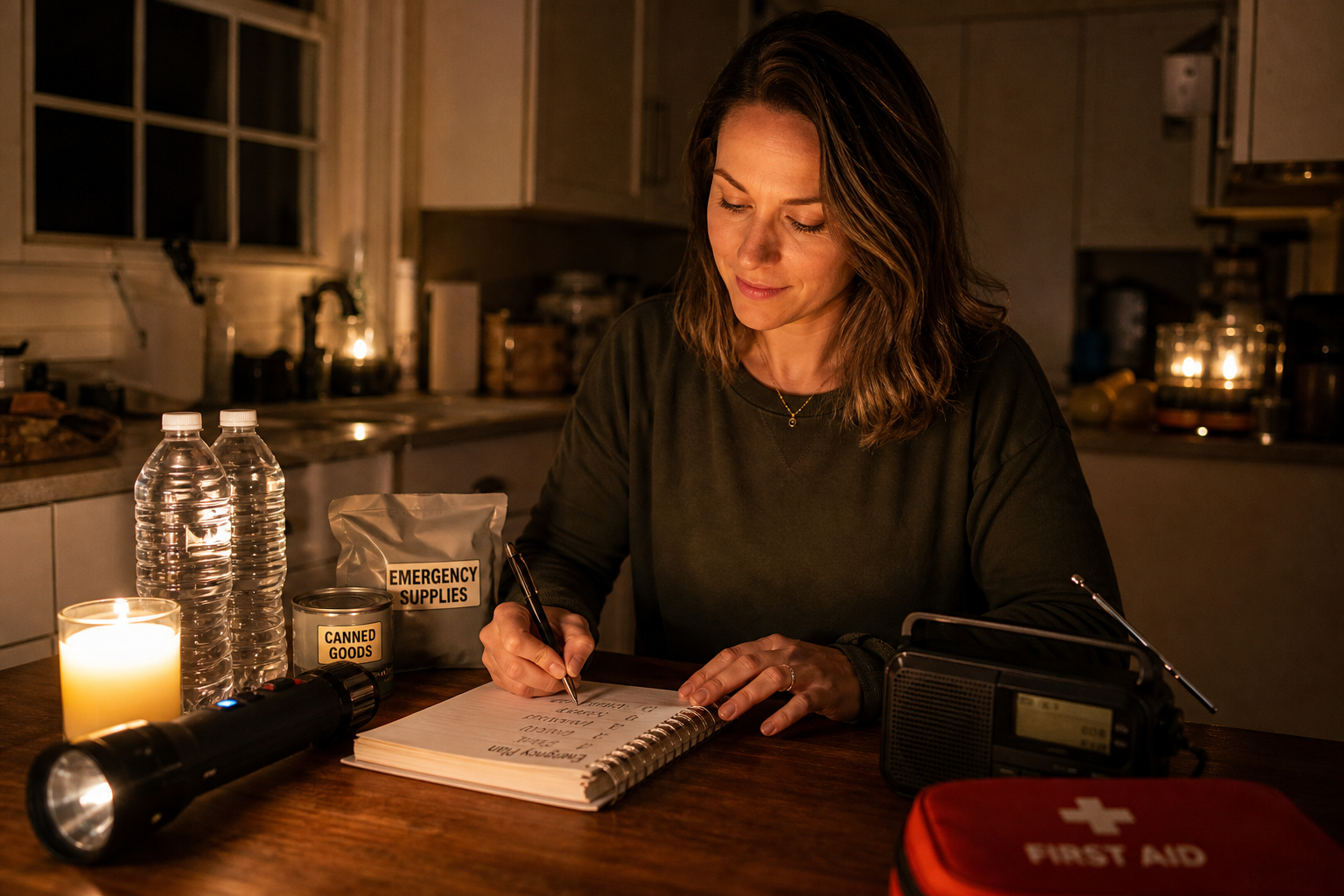
When the Lights Go Out: The Complete Power Outage Survival Guide for Women
The power goes out.
For most women it starts the same way — a flicker, then darkness, then that particular silence when all the background hum of modern life stops at once. Your phone screen is the only light in the room.
What happens in the next 15 minutes determines whether this is a minor inconvenience or a genuine emergency.
Most women are not prepared for either outcome. This post changes that.
Whether you live in an apartment on the 14th floor or a house in the suburbs, whether it's July or January, whether the outage lasts two hours or two weeks — this guide covers exactly what to do, what to eat, what to avoid, and when it is time to leave.
The First 15 Minutes — What to Do Before You Do Anything Else
The first 15 minutes after a power outage are when most mistakes happen. People light candles near curtains. They open the fridge repeatedly to check if the food is okay. They run extension cords from generators into the house. These decisions have consequences.
Here is the correct sequence:
- Grab your flashlight immediately. It should be in the same location every day — nightstand, kitchen drawer, under the couch. Not somewhere you have to search for in the dark.
- Check your breaker box. If only your unit is out, check for a tripped breaker first. If the entire neighborhood is dark, skip this step.
- Report the outage to your utility company. Do this from your phone immediately — response time depends on how quickly they know the extent of the outage.
- Set your fridge and freezer to their coldest settings. A closed refrigerator maintains safe temperature for approximately 4 hours. A full freezer holds temperature for 48 hours. A half-full freezer for 24 hours. Every degree of cold you trap now matters.
- Unplug sensitive electronics. Televisions, computers, gaming consoles, and small appliances should be unplugged to protect them from power surge damage when electricity is restored.
- Turn on your NOAA weather radio. Find out what caused the outage and how long it's expected to last. This information changes every decision you make for the next several hours.
- Charge your phone and power bank immediately. If you have any battery left, start charging before it drops further.
⚠️ The One Thing Most Women Do Wrong in the First 5 Minutes
Opening the refrigerator to check on food. Every time you open that door you release cold air and shorten your food safety window. Resist the instinct. Your food is fine — for now. The calculator below will tell you exactly when that changes.
Apartment vs House — The Differences That Matter
Generic power outage guides assume you live in a single-family house. Most women do not. Here is what actually changes based on your living situation:
| Situation | 🏢 Apartment | 🏠 House |
|---|---|---|
| Heat loss speed | Faster on corner/top units. Shared walls from neighbors provide some passive heat. | Slower with good insulation. Basement retains heat longest. |
| Water pressure | May fail above floor 6–8 in extended outages. Electric pumps stop working. | Usually maintained by gravity-fed municipal systems for moderate outages. |
| Generator use | NEVER indoors or in a garage. Carbon monoxide in shared buildings kills multiple units. | Outdoors only, minimum 20 feet from any window or door. |
| Elevator access | Will fail. Know your stairwell route before any emergency. Practice it in the dark. | Not applicable. |
| Heating alternatives | Electric space heaters won't work. Propane heaters — window open required. Building heat may be centralized and also offline. | More heating options including fireplace, wood stove, safe outdoor propane. |
| Safe shelter duration | 24–48 hours realistically before leaving becomes necessary in extreme temperatures. | 48–72 hours in most conditions before considering relocation. |
| Community dynamic | Neighbors closer — community resource or safety risk depending on building culture. Know your neighbors before an emergency. | More isolated — know which neighbors you can count on in advance. |
| Carbon monoxide risk | Higher — shared ventilation means one unit's dangerous decision affects everyone. | Lower but still present — never use gas ovens or grills indoors for heat. |
🏢 If You Live in an Apartment — Do This Now
- Walk your stairwell route to the ground floor — today, not during an emergency
- Introduce yourself to at least two neighbors on your floor
- Know which floor your building's emergency generator covers (usually lobby and elevators only)
- Know if your building has backup water pressure equipment
- Keep battery-powered everything — no generator options in most apartment situations
How Long Is My Food Actually Safe? — Interactive Calculator
This is the question every woman asks during a power outage — and gets wrong. The answer depends on how long the power has been out, whether you opened the fridge, and what type of food you're asking about.
Use the slider below to set your outage duration and see exactly what is safe, what needs to be used today, and what must be discarded:
Canned Food — The Honest Truth About Safety and Alternatives
Canned food is the backbone of most emergency food plans. It is shelf stable, widely available, inexpensive, and requires no cooking in many cases. But the conversation about canned food during emergencies needs to be more honest than most preparedness guides allow.
The BPA Problem
The majority of canned food in the United States is lined with Bisphenol A — BPA — a synthetic estrogen that leaches into food, particularly in acidic foods like tomatoes, citrus, and beans. The FDA considers current exposure levels safe, but independent research has consistently linked BPA to hormonal disruption, and women are disproportionately affected due to estrogen sensitivity.
During a normal week this is a moderate concern. During an extended emergency where canned food becomes your primary food source for days or weeks — this concern increases significantly. This does not mean you should not stock canned food. It means you should make informed choices about which cans you stock.
The Dented Can Question
Not all dented cans are unsafe — but the guidance most people have heard is dangerously oversimplified.
- Small dents on the side of the can: Generally safe. The seal is intact. The dent is cosmetic.
- Deep dents on the seam — top, bottom, or side seam: Discard. Seam damage compromises the hermetic seal and creates a pathway for bacterial contamination.
- Bulging cans: Discard immediately without opening. Bulging indicates gas produced by bacterial activity inside — almost always Clostridium botulinum, which produces botulinum toxin. This is a life-threatening situation.
- Rusted cans: Surface rust that wipes off is acceptable. Deep pitting rust that you cannot wipe clean means the can wall integrity is compromised — discard.
- Spurting liquid when opened: Discard immediately. Do not taste test. Do not smell. Botulinum toxin is odorless and tasteless and is lethal in tiny quantities.
⚠️ Never Taste Test Suspicious Canned Food
The impulse to taste something to see if it is "off" is hardwired human behavior. In the context of botulism it can be fatal. Botulinum toxin has no smell, no taste, and no visible signs. When in doubt — throw it out. No meal is worth your life.
Canned Food — The Honest Pros and Cons
| Factor | The Reality |
|---|---|
| ✅ Shelf life | 2–5 years for most products. Some high-acid foods (tomatoes, fruit) are best within 18 months. Low-acid foods (vegetables, meat, beans) last up to 5 years. Best by dates indicate peak quality — most canned food is safe beyond this date if the can is intact. |
| ✅ Cost | Among the most affordable emergency food storage options. A 3-day supply of canned goods for one person costs approximately $15–$25. |
| ✅ No cooking required | Most canned foods can be eaten directly from the can at room temperature — critical during power outages when cooking options are limited. |
| ✅ Widely available | Every grocery store carries them. No specialty ordering required. Can be built up gradually over regular shopping trips. |
| ⚠️ BPA exposure | Most conventional cans are BPA-lined. Increased risk for acidic foods and extended consumption. Look for BPA-free labeling when possible — Eden Organics, Muir Glen, and many store brands now offer BPA-free options. |
| ⚠️ High sodium content | Emergency canned food consumption dramatically increases sodium intake. For women with hypertension, kidney conditions, or pregnancy-related blood pressure issues this matters. Rinse canned beans and vegetables under water to reduce sodium by up to 40% when water is available. |
| ⚠️ Nutritional degradation | The canning process destroys heat-sensitive vitamins — particularly Vitamin C and B vitamins. Over an extended emergency relying primarily on canned food, nutritional gaps accumulate. Supplement with multivitamins in your emergency kit. |
| ⚠️ Weight and bulk | Canned food is heavy and bulky — not appropriate as primary go-bag food. Suitable for shelter-in-place scenarios, not evacuation. |
Better Alternatives and Complements to Canned Food
The goal is not to eliminate canned food from your emergency supplies — it is to build a more balanced, safer, and more practical food storage system that addresses canned food's limitations:
- Freeze-dried food pouches — Mountain House, Augason Farms, and similar brands offer 25-year shelf life, lightweight packaging, full nutritional profiles, and no BPA. The tradeoff is cost — significantly more expensive per serving than canned food. Ideal for go-bags and longer-term storage.
- Retort pouches — The same preservation technology as canning but in flexible BPA-free pouches. Tuna pouches, salmon pouches, chicken pouches. Same shelf life as cans, no BPA, lighter weight, require no can opener.
- Mylar bag dry goods — Rice, beans, lentils, oats, pasta sealed in mylar bags with oxygen absorbers last 25–30 years. Requires cooking but provides the most calories per dollar of any storage food. Ideal for longer-term home storage.
- Vacuum sealed nuts and seeds — High calorie density, healthy fats, no cooking required. 1-year shelf life in a cool dark location. Excellent as a canned food complement.
- BPA-free canned options — Many brands now offer BPA-free cans. When purchasing canned goods for emergency storage specifically, look for BPA-free labeling — the price premium is modest and the health benefit during extended emergency use is meaningful.
✅ The Balanced Approach
Stock canned food as your affordable foundation — it is practical, accessible, and genuinely effective. Supplement it with freeze-dried pouches for go-bags and evacuation, retort pouches for a BPA-free everyday option, and mylar-sealed dry goods for long-term home storage. No single format serves every scenario. A mixed system serves all of them.
Lighting Without Power — Ranked by Safety and Practicality
Not all light sources are equal during a power outage. Here they are ranked from safest and most practical to most dangerous:
LED Battery Lanterns and Headlamps ✅ Best choice
Zero fire risk, no fumes, hands-free option with headlamp, multiple brightness settings, long battery life. This is your primary lighting for any power outage. One per person in the household minimum.
Solar-Powered Indoor Lanterns ✅ Excellent for extended outages
Charge outside during the day, use inside at night. Zero operating cost, no batteries to replace. Charge time matters — have a battery backup for the first night before solar charging is possible.
Glow Sticks ✅ Safe for children and sleeping areas
No fire risk, no batteries, safe for kids to hold. Not bright enough for primary use but excellent as nightlights for children's rooms and hallways.
Candles ⚠️ Use with strict rules
Never leave unattended. Never near curtains, paper, or fabric. Never in a child's room unsupervised. Use in a stable holder on a non-flammable surface only. Candle fires during power outages cause thousands of house fires annually. Use sparingly and with full attention.
Gas Stoves, Ovens, or Grills for Light or Heat ❌ Never
Carbon monoxide poisoning kills more people during power outages than any other cause. Gas ovens, charcoal grills, propane camp stoves, and generators produce carbon monoxide that accumulates in enclosed spaces silently and fatally. These are outdoor-only devices without exception.
Staying Warm or Cool Without Power
Winter — Staying Warm
A house or apartment without heat loses approximately 1 degree per hour in mild weather — faster in extreme cold or poor insulation. Here is how to slow that loss and stay safe:
- Consolidate to one room. Pick the smallest interior room with the fewest windows. Close all doors between you and the cold. Body heat in a small space is surprisingly effective.
- Layer properly. Your base layer against skin should be moisture-wicking synthetic or wool — not cotton. Cotton retains moisture and accelerates heat loss. Add insulating mid-layers and a wind-blocking outer layer.
- Use your sleeping bags. Rated sleeping bags used indoors are extremely effective at maintaining body temperature even in cold indoor environments.
- Safe indoor heating alternatives: Propane heaters rated for indoor use (Mr. Heater Buddy series) with a window cracked 1 inch for ventilation. Never use outdoor propane heaters, charcoal, or gas appliances indoors.
- Hot water bottles. Fill with hot water from a thermos, kettle, or stove-heated pot. Place at the foot of a sleeping bag for hours of warmth.
Summer — Staying Cool
Heat is more immediately dangerous than cold. A healthy adult can survive surprisingly cold temperatures with proper layering. Heat exhaustion can develop in hours during an extreme heat event without air conditioning.
- Move to the lowest floor. Heat rises. Your basement or ground floor can be 10–15 degrees cooler than upper floors.
- Close curtains and blinds during daylight. Blocking direct sunlight significantly reduces indoor temperature.
- Use battery-powered fans strategically. A fan blowing across a bowl of ice creates a simple evaporative cooler. Wet a bandana and wear it around your neck — evaporation cools the carotid arteries effectively.
- Stay hydrated. Your body's cooling mechanism is sweat — it only works if you are hydrated. Increase water intake significantly during heat emergencies.
⚠️ Female-Specific Temperature Vulnerabilities
Pregnant women, women in menopause (hot flashes plus ambient heat), infants, and elderly women are all at elevated risk during temperature extremes without power. These individuals need priority attention — and their specific needs must be factored into your shelter-in-place vs leave decision.
Medical Equipment That Depends on Electricity
This section does not exist in mainstream power outage guides. It needs to.
- CPAP machines: Battery backup CPAP devices exist — the ResMed AirMini and Philips DreamStation Go both have battery options. If you use CPAP and don't have a battery backup, this is your most urgent preparedness purchase. One night without CPAP for severe sleep apnea users is a medical event.
- Insulin refrigeration: Most insulin maintains potency at room temperature (below 77°F) for 28–56 days depending on type. Novolin and Humulin products typically last 28 days unrefrigerated. Humalog and NovoLog are stable up to 28 days. Lantus is stable up to 28 days. Keep an insulated pouch with ice packs for extended outages. Contact your endocrinologist in advance for specific guidance on your insulin type.
- Oxygen concentrators: These require continuous power. If anyone in your household depends on supplemental oxygen, register with your utility company as a medical-priority customer — many utilities have programs that prioritize restoration for medical-dependent customers. Have portable oxygen tanks as backup.
- Electric wheelchairs and mobility devices: Keep chairs charged to full whenever severe weather is predicted. Have a manual backup wheelchair if possible.
- Nebulizers: Battery-operated and USB-powered nebulizers exist and should be in every asthmatic's emergency kit. Your pharmacy can recommend options compatible with your medications.
- Breast milk storage: Pumped breast milk is safe in an insulated cooler with ice packs for 24 hours. A full freezer maintains safe temperature for 48 hours. Formula preparation requires clean water — have a supply staged.
Communication When Cell Towers Congest
Within minutes of a major power outage, cell networks in affected areas congest from the volume of calls. Here is how to communicate effectively when towers are overloaded:
- Text instead of call. Text messages use significantly less network bandwidth than voice calls and are far more likely to get through on congested networks.
- Use WiFi calling. If your internet router has battery backup (a UPS — uninterruptible power supply), your WiFi may still function even without power. WiFi calling bypasses the cellular network entirely.
- NOAA weather radio is your most reliable information source. It broadcasts on dedicated frequencies completely independent of the internet and cellular network. Battery or hand-crank powered models work when everything else fails.
- Establish a check-in protocol in advance. Everyone in your household should know: text the out-of-state contact every 2 hours during an outage. Silence means something is wrong.
- Conserve battery ruthlessly. Lower screen brightness to minimum. Turn off Bluetooth and WiFi if not using them. Enable low power mode. Every percentage of battery matters.
Shelter in Place vs Leave — The Decision Framework
This is the decision most guides avoid making for you. I will not do that.
Where to go when you leave: A friend or family member outside the affected area is always your first choice. If that is not available, warming and cooling centers are operated by local emergency management during extreme weather outages — your county emergency management website or a call to 211 will identify the nearest location. Hotels outside the affected area are your third option if the first two are unavailable.
The 72-Hour Power Outage Checklist
Use this checklist in real time during an actual outage — check items off as you complete them:
🎯 Know Exactly Where You Stand
Take the SurvivElle Archetype Quiz — 10 questions will tell you exactly what to tackle next based on your level right now.
Take the Quiz →🎒 Get the Free 72-Hour Survival Starter Kit
52-item checklist built specifically for women — everything most guides leave out.
Get Your Free Kit →📌 How prepared are you for a power outage right now? Save this post and share it with a woman who needs it.