
The 15-Minute Evacuation Plan Every Woman Needs
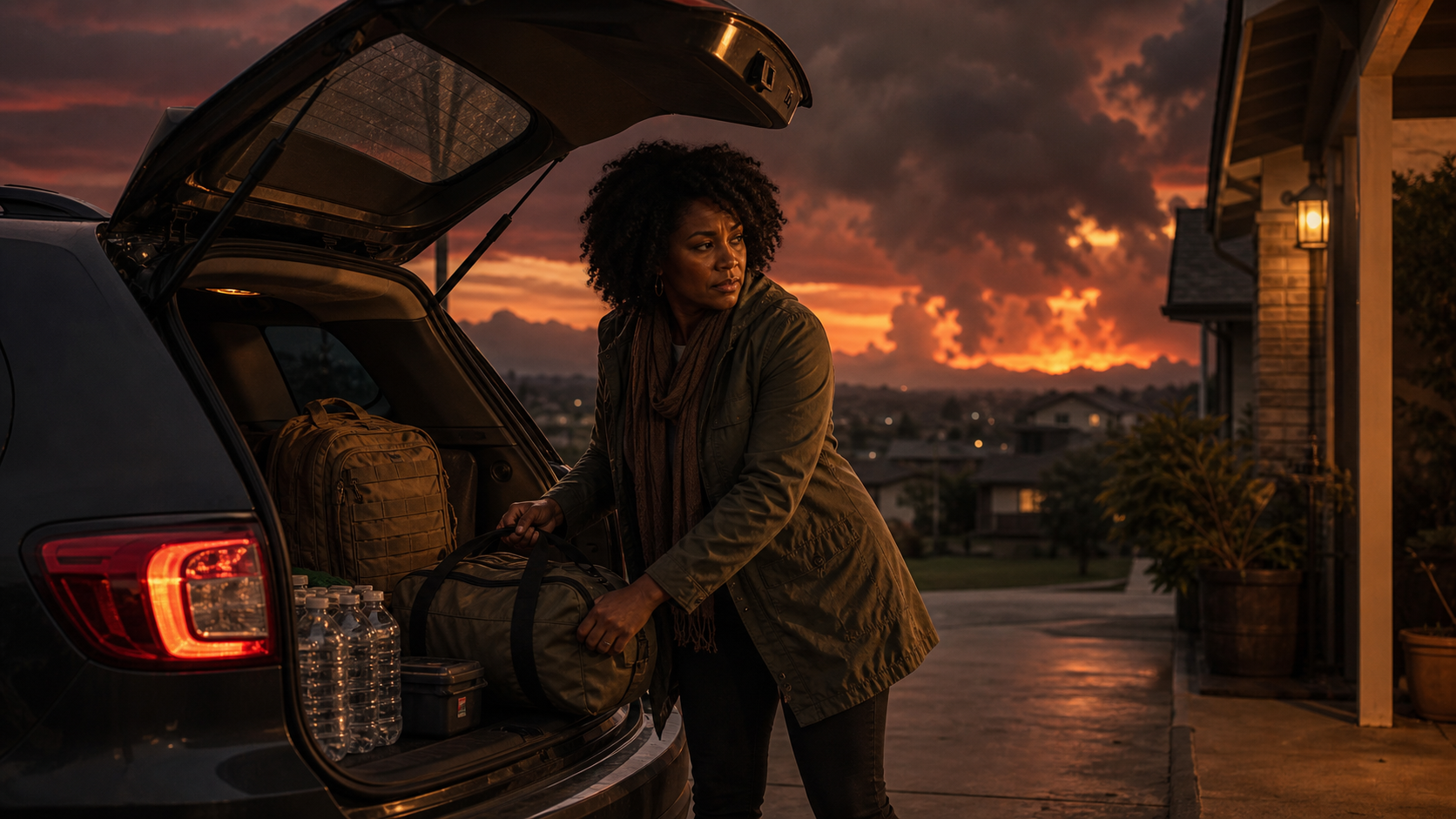
The 15-Minute Evacuation Plan Every Woman Needs Before Disaster Strikes
The evacuation order comes at 2am.
Your phone screams an emergency alert. You sit up in the dark, heart pounding, and think: Okay. What do I do first?
If you do not already know the answer to that question — this post is for you.
Evacuation is the most time-pressured emergency most women will ever face. You have minutes, not hours. The roads will congest within an hour of any official order. Gas stations will run out within two. And the women who move first — with a plan — are the ones who get out safely.
The women who hesitate, who try to figure it out in the moment, who go back for one more thing — those are the women who end up trapped.
Let's make sure that is never you.
Why Women Face Unique Evacuation Challenges
Mainstream evacuation guides treat everyone the same. They assume a physically capable adult, no dependents, no special medical needs, a full tank of gas, and plenty of warning time. That is not most women's reality.
Women are statistically more likely to be the primary caregiver for children, elderly parents, and pets. Women are more likely to be living alone. Women are more likely to face mobility challenges related to pregnancy. And women — particularly single women — are more likely to be targeted during the chaos and vulnerability of a mass evacuation event.
None of this is in the FEMA pamphlet.
Before Any Emergency: The 5 Things to Set Up Now
Evacuation planning is not something you do when the alert goes off. It is something you do on a calm Tuesday afternoon so that when the alert goes off, you are already ready.
-
1
Identify Two Evacuation Routes Out of Your Neighborhood
Drive both of them. Know where they go. Know which roads flood first, which bridges close first, and which routes law enforcement typically contraflows during major evacuations. Write them down. Do not rely on GPS — cell towers fail in disasters.
-
2
Choose Two Destination Locations
Location A: 50-100 miles away — a specific friend or family member's address you can drive to without GPS. Location B: 200+ miles away — a hotel, family member, or shelter in a different region in case Location A is also in the evacuation zone.
-
3
Designate an Out-of-State Contact
During local disasters, local phone lines jam. Long-distance calls often get through when local ones cannot. Pick one person outside your state who becomes the communication hub — everyone checks in with them, and they relay information between family members.
-
4
Stage Your Go-Bag
Your go-bag should be packed, in the same location, every single day. Not something you assemble when the alert comes. A bag you grab and go. We will cover exactly what goes in it below.
-
5
Keep Your Gas Tank Above Half — Always
This single habit is the difference between evacuating and being stranded. When an evacuation order comes, every gas station within 50 miles will have lines around the block within an hour. If your tank is full, you drive past all of it.
The Evacuation Timeline: What Every Minute Costs You
Understanding the timeline of a typical evacuation order changes how seriously you take advance preparation. This is what happens after a mandatory evacuation order is issued:
⚠️ The Brutal Truth About Evacuation Timing
The women who survive are not the ones who left when it was officially safe to leave. They are the ones who left when it still looked like they might not need to. Leaving early — even if the threat never materializes — costs you a night in a hotel. Leaving late can cost everything.
What Actually Goes in a Go-Bag — Female Edition
The standard go-bag lists online were written for men. Here is the complete female-specific version, organized by priority:
Evacuation by Life Situation
If You're a Single Woman Living Alone
Your biggest advantage is speed — no one to coordinate, no one to argue with, no one to wait for. Use it.
- Tell someone your plan before you leave. Text your out-of-state contact your route, destination, and estimated arrival. If you don't check in, they know to alert authorities.
- Load your car the night before any predicted storm. Do not wait for the official order. Have your bag at the door, gas tank full, car pointed toward your primary route.
- Personal safety is heightened during evacuations. Gas stations, rest stops, and shelters during mass evacuations can be dangerous environments for women alone. Travel during daylight when possible. Trust your instincts.
- Have a destination that expects you. Call ahead. Don't arrive somewhere unannounced at 3am during a regional emergency.
If You're a Mom with Young Children
Children add time to every single step. Add 30 minutes to whatever you think your prep time is, then add 15 more. Here is how to compensate:
- Practice your evacuation drill. Walk through it with your kids. They should know what "we have to go now" means and what to do. Children who have rehearsed are dramatically calmer and more cooperative in actual emergencies.
- Each child old enough to walk carries their own small bag. A backpack with their comfort items, one change of clothes, and a snack. This gives them agency and reduces your load.
- Car seats go in the car first. Not last. In the chaos of a real evacuation, parents have been known to load everything and then realize the car seat is still inside.
- Pack medications and formula in a separate clearly labeled bag. These are your non-negotiables — they need to be the fastest thing to grab.
- Have an emergency card in every child's bag. Full name, parents' names, out-of-state contact phone number, blood type, and any medical conditions. If you get separated, your child has the information they need.
📋 The Emergency Card Every Child Should Carry
Write this on an index card, laminate it, and put it in your child's go-bag AND sewn into the lining of their jacket:
- Child's full legal name and date of birth
- Parent/guardian names and relationship
- Out-of-state emergency contact — name and phone number
- Child's blood type and any allergies or medical conditions
- Family meeting point if separated
- Home address
If You Have Pets
Here is the uncomfortable truth about evacuating with pets: most emergency shelters do not accept them. This means your pet-friendly destination must be identified, confirmed, and written down before any emergency happens.
- Identify pet-friendly hotels on your primary evacuation route right now. Call ahead during non-emergency times and confirm their pet policy. Save the address and phone number in your phone AND written on paper.
- Have a pet go-bag staged alongside your own. Food and water for 3 days, medications, vaccination records, a current photo of you with your pet (proof of ownership), collar with ID tags, leash, carrier for cats and small dogs.
- Never assume a shelter will make an exception. They will not. The women who bring their pets to shelters that don't accept them are turned away at the door — often at night, in a storm, with nowhere else to go.
- Microchip your pets. In the chaos of evacuation, animals get loose. A microchip is the only reliable way to reunite with a lost pet after a disaster.
If You're Caring for an Elderly Parent
Elderly adults require the most advance preparation of any group. Mobility limitations, medication complexity, and sometimes the emotional resistance to leaving a home of 40 years — all of these require you to plan farther ahead and start earlier.
- Have the evacuation conversation now, not during the emergency. Know their position. Have an agreed plan. The worst time to negotiate with a parent who doesn't want to leave is at 2am with an approaching hurricane.
- Stage a transport wheelchair or transport chair near the exit. Not in a closet. Near the exit. Getting an elderly parent with limited mobility to a car quickly is a physical challenge that must be practiced.
- Keep a 30-day medication supply maintained. This is non-negotiable for elderly individuals with heart conditions, blood pressure medications, thyroid issues, or diabetes. Running out of these medications during a disaster is a life-threatening medical event.
- Know which shelters in your area are medical-needs shelters. Many counties have special-needs shelters for individuals who require medical support. Register in advance — they often require pre-registration.
Your Car Is Your Evacuation Vehicle — Treat It That Way
During an evacuation your car is not just transportation. It is your shelter, your storage unit, your communication center, and potentially your overnight accommodation. Here is what should always be in it:
🚗 What Should Live in Your Car Year-Round
- Paper maps of your state and region — downloaded offline GPS backup too
- Phone charger and car power adapter — always plugged in
- Emergency cash — $50 minimum in small bills in the glove compartment
- Jumper cables or jump starter power bank
- Basic tool kit — flathead, Phillips, pliers, duct tape
- Blanket and rain poncho
- 3-day water supply in the trunk — replace every 6 months
- Granola bars or shelf-stable snacks — rotate quarterly
- Work gloves and N95 masks
- First aid kit
- Gas can — empty but ready to fill
The gas rule deserves its own emphasis: Never let your tank go below half during any period when severe weather is possible in your region. For women in hurricane country, tornado alley, wildfire zones, or flood-prone areas — this is a year-round habit, not a seasonal one.
During the Evacuation: What to Do and What to Avoid
What to Do
- Leave before the official order if conditions are worsening. Voluntary evacuation orders are not suggestions — they are advance warnings from people who have the data you don't. Women who leave on voluntary orders have a dramatically higher survival rate than those who wait for mandatory orders.
- Take your primary route first. If it's blocked or congested, go to your secondary route. Do not improvise unfamiliar roads in emergency conditions.
- Check in with your out-of-state contact every 2 hours. Let them know where you are, which route you're on, and your estimated next check-in time.
- Fill your gas tank at the first opportunity, even if it doesn't need it. Top off whenever you can. You do not know when the next opportunity will come.
- Monitor your NOAA weather radio continuously. Conditions can change. What was a safe route an hour ago may not be safe now.
What to Avoid
- Never drive through flooded roads. Six inches of water can cause a car to lose control. 12 inches will float most vehicles. Two feet will sweep away an SUV. Turn Around Don't Drown — without exception.
- Don't shelter under highway overpasses during tornadoes. The wind tunnel effect under an overpass actually increases wind speed and strips protective debris barriers. It is one of the most dangerous places to be during a tornado.
- Don't go back for things. No possession is worth your life. If you left something behind and you are already out, it stays behind.
- Don't share your exact route or destination on social media. Broadcasting your location and the fact that your home is empty during a disaster creates safety and security risks.
- Don't wait for your neighbors to leave first. Your neighbors may not have a plan. Their hesitation is not data about whether it is safe to stay.
After the Evacuation: What Comes Next
Getting out safely is step one. What you do in the 24-72 hours after evacuation matters just as much.
- Do not return home until official all-clear is given. Not when it looks safe on the news. Not when your neighbor texts that they went back. When official authorities clear your specific area.
- Document everything before re-entering your home. Video your home exterior before you go in. Photograph every room before touching anything. This documentation is critical for insurance claims.
- Check for gas leaks before turning on any lights or appliances. If you smell gas, do not enter. Call your gas company from outside.
- Assume tap water is unsafe until confirmed otherwise. Boil water advisories often follow disasters — sometimes for weeks.
- Register with the American Red Cross Safe and Well database so family members who don't have your contact information can find you.
Build Your Personalized Evacuation Plan Right Now
Knowing the principles is one thing. Having a plan that shows you exactly which states you will pass through, which highways to take, what to avoid, and which gear to prioritize for your specific threat — that is what actually saves lives.
We built the SurvivElle Evacuation Planner specifically for this. Click your state, choose your threat, pick your direction, and get your personalized corridor in seconds.
What to Do Right Now — Today
You have read this far. That means something. Here is the 15-minute action plan that will make you more prepared than the majority of women in your neighborhood:
✅ The One Thing That Matters Most
You do not need a perfect plan. You need a plan that is better than no plan. Every item on this list you complete today puts distance between you and the women who will be scrambling when the alert comes. Start with one thing. Do it right now.
🎯 What Kind of Prepper Are You?
Take the SurvivElle Archetype Quiz — 10 questions tell you exactly where you stand and what to tackle next.
Take the Quiz →🎒 Get the Free 72-Hour Survival Starter Kit
52-item checklist built specifically for women. Everything most guides leave out — including what they never talk about.
Get Your Free Kit →📌 What's your biggest evacuation concern? Save this post and share it with a woman in your life who doesn't have a plan yet.